The Three-Strip Technicolor Camera: Engineering Color into Hollywood
For over two decades, the three-strip Technicolor camera was the most sophisticated instrument for capturing full-spectrum color in motion pictures. This complex machine ran three negatives simultaneously, splitting light into primary components to create the vivid imagery that defined Hollywood's Golden Age.
When Hollywood committed to color, it committed to a machine of unprecedented complexity: the three-strip Technicolor camera. From its widespread adoption in the mid-1930s until the 1950s, this massive device was the industry's answer to capturing a full, stable, and vibrant color spectrum, turning the film factory floor into a specialized operation from start to finish.
A Tripartite Vision on the Set
At the core of the three-strip Technicolor system was a marvel of optical engineering: a beam-splitter prism, located directly behind the camera's lens. This prism divided the incoming light into two distinct paths. One path directed blue light to a single black-and-white negative film stock, treated to be sensitive only to blue light. The second path, carrying red and green light, passed through a magenta filter before striking a bi-pack—two additional black-and-white negatives pressed tightly together, emulsion-to-emulsion.
The front film in this bi-pack was sensitive to green light, and the magenta filter allowed it to record the green component. Behind it, the second film, sensitive to red light, recorded the red component. Crucially, all three negatives—the blue-record, the green-record, and the red-record—ran simultaneously through the camera at a meticulously synchronized speed. This ingenious setup ensured that every frame captured on location or on a soundstage resulted in three distinct, monochrome records, each representing a primary color component of the original scene.
Demanding Precision, From Capture to Print
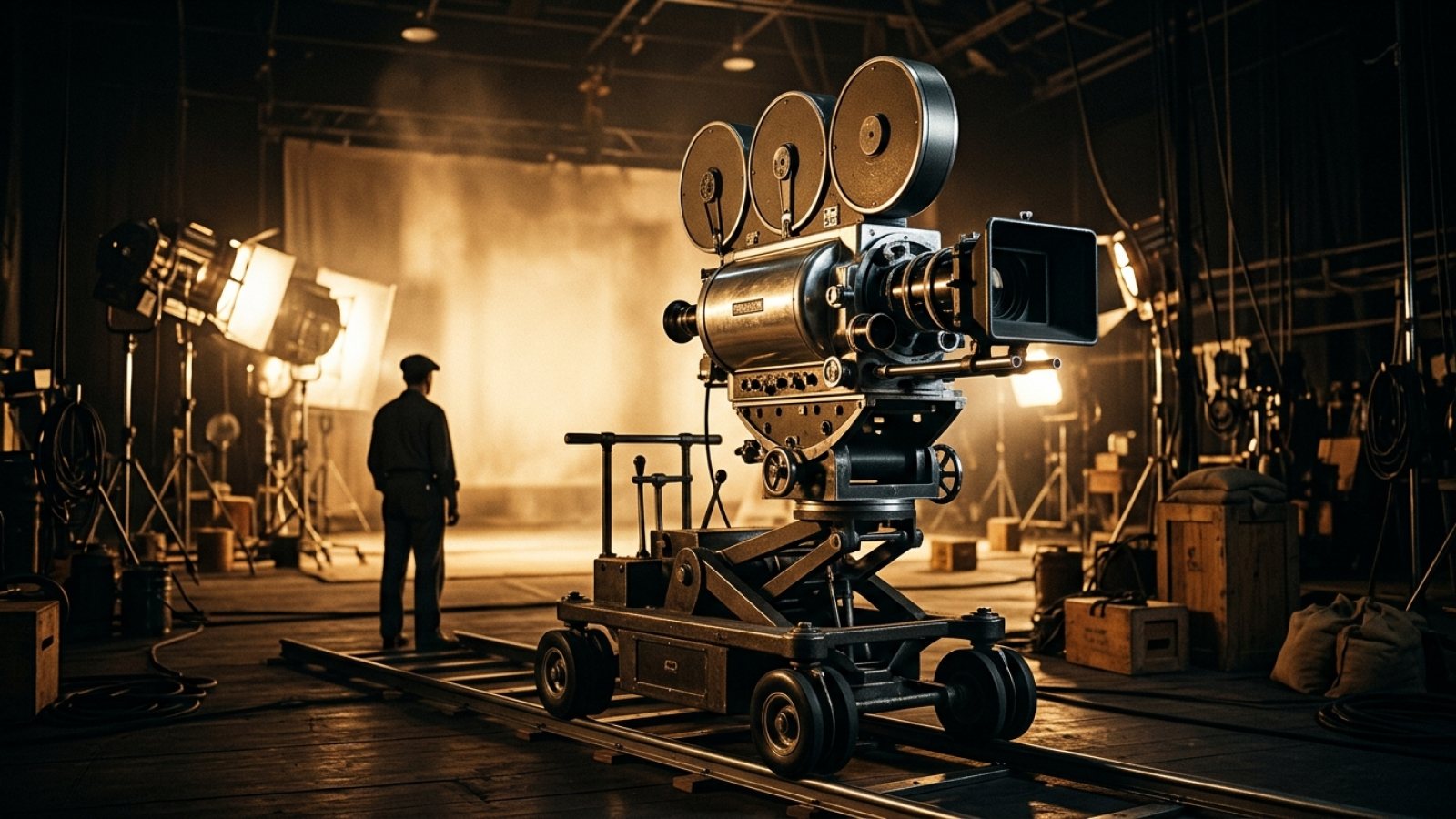
Operating the three-strip Technicolor camera was no small feat. The camera itself was a behemoth, weighing hundreds of pounds and requiring specialized, reinforced dollies for movement. Its complex internal mechanics, including the precise alignment of the prism and the three film gates, meant that Technicolor provided the cameras to studios, along with highly trained camera technicians, rather than selling them outright. The light loss inherent in the beam-splitter system, combined with the relatively slow speed of the early film stocks, necessitated extraordinarily bright lighting on set. Massive arc lamps, generating intense heat, became a common sight, requiring larger electrical crews and constant attention to actor comfort and set temperature.
The real factory work began once the three rolls of exposed negative film left the set. Back in the Technicolor laboratories, each of the three negatives was developed separately. From these negatives, three corresponding positive “matrix” films were created. These matrices, essentially dye-transfer stamps, were then immersed in vats of complementary dyes: cyan for the red-record matrix, magenta for the green-record matrix, and yellow for the blue-record matrix. In the final, critical step, these dye-laden matrices were successively pressed onto a single, blank print stock in a process called imbibition printing. This precise layering transferred the three color dyes, creating a single, full-color release print with unmatched color stability and saturation.
The Unmistakable Mark of Color
The visual impact of three-strip Technicolor was immediate and profound. Its vivid, often highly saturated palette offered a dramatic departure from earlier, limited two-color processes. Walt Disney’s animated short Flowers and Trees in 1932 was one of the first productions to use the process, winning an Academy Award and paving the way for further adoption. The first live-action feature to fully employ the three-strip process was Becky Sharp in 1935, though it was Warner Bros.' The Adventures of Robin Hood in 1938 that cemented its commercial appeal. By 1939, films like The Wizard of Oz and Gone With The Wind showcased the process at its zenith, establishing a visual benchmark for cinematic spectacle.
For more than two decades, the Technicolor camera remained the gold standard for quality color cinematography, shaping audience expectations and demonstrating the power of color storytelling. While eventually supplanted by single-strip negative processes like Eastmancolor in the 1950s, the engineering achievement of the three-strip camera, and the complex industrial process it initiated, stands as a pivotal moment in the machinery of moviemaking, forever changing how color was captured and delivered to the screen.
