
Shot Without Film: How 2002 Took the Feature Film Digital
When a major studio feature opened in May 2002 having been shot with no film at all, it settled a question that a French fantasy film and a single take inside a Russian palace had already begun to answer. A little over a decade later, most major films were being shot digitally.
For more than a century, making a movie meant exposing film. Light passed through a lens, struck a strip of photographic emulsion, and the strip went to a laboratory to be developed. When Star Wars: Episode II – Attack of the Clones opened in the United States on May 16, 2002, it had been made without any of that. Every scene was recorded on high-definition digital cameras, and the result was one of the first major motion pictures shot entirely on a 24-frame digital system. It was not quite the first feature to do it, and its makers had announced the plan years in advance, but it was by far the most prominent production to do it.
A Camera Built for the Job
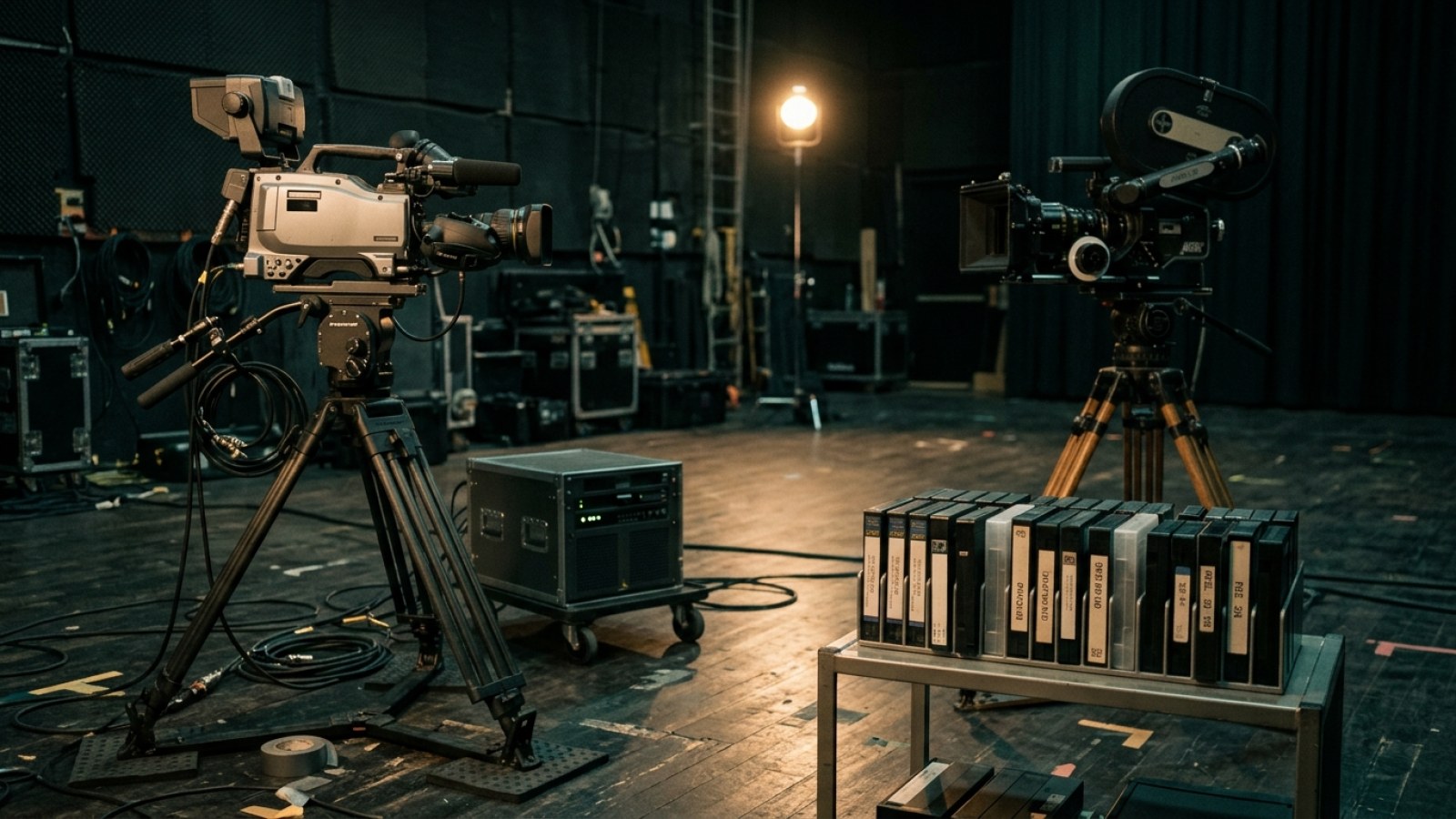
In June 1999, George Lucas announced that Episode II would be the first major motion picture shot 100 percent digitally. No camera on the market could do it properly. Television cameras recorded interlaced video, a different kind of picture from the 24 whole frames per second that cinema had used since the sound era. Sony and Panavision worked together on a high-definition camera that could shoot 24 true progressive frames per second, and the result was the Sony HDW-F900, the first of Sony's CineAlta line. Panavision's adapted version was also known as the HD-900F.
The schedule was tight. The cameras arrived one week before principal photography, which ran from June to September 2000, mainly at Fox Studios Australia in Sydney, with location work in Tunisia, Italy and Spain. The F900 recorded to HDCAM tape in a 16:9 frame, and the picture was cropped to a 2.40:1 widescreen ratio for the cinema. The extra image above and below the crop gave the filmmakers room to reframe shots afterwards. The earlier film, The Phantom Menace (1999), had been shot almost entirely on 35mm, with only a few shots on a Sony HDCAM camcorder. When it opened, digital projectors were installed in four theatres to show it alongside the ordinary film prints.
Who Got There First
Others were working at the same time, and some finished sooner. In May 2000, a few weeks before Lucas's crew started, the French director Pitof began principal photography on Vidocq, a dark fantasy with Gérard Depardieu, using the same Sony F900. Released in 2001, Vidocq is generally counted as the first feature shot entirely in 24-frame progressive high definition, and Guinness World Records lists it as the first full-length feature filmed in digital high resolution. Another 2001 release, Jackpot, was also shot on a 24p digital camera, which made Attack of the Clones the third such release, not the first.
A different first came from Russia. On December 23, 2001, Alexander Sokurov filmed Russian Ark inside the Winter Palace of the State Hermitage Museum in St. Petersburg as one continuous 87-minute Steadicam shot. That is far longer than any reel of film can run. The picture was recorded uncompressed straight to a hard disk instead of to tape, which makes Russian Ark the first tapeless digital feature. It was entered at the Cannes Film Festival in May 2002, the same month Attack of the Clones reached cinemas.
So "the first feature shot without film" has more than one answer, depending on whether the measure is release date, budget or method. What 2002 changed was the size of the bet. A small fantasy, an art film and the biggest studio release of the season had all reached the screen without a frame of negative, and the cameras had held up.
From Experiment to Default
The argument did not end in 2002. The choice set off a long debate over the merits of digital capture, and many cinematographers kept shooting on film. Its successor, Revenge of the Sith (2005), moved up to Sony's HDC-F950. In 2009, Slumdog Millionaire became the first film shot mainly on digital to win the Academy Award for Best Cinematography. In the same year, Avatar, whose live-action scenes were shot digitally, became the highest-grossing film released up to that time.
By 2013, more major films were being shot on digital than on film, and by 2016 the share was over 90 percent. Only 24 major films released in 2018 were shot on 35mm. Film stock is still made, and some directors still choose it on principle. The craft built around the digital camera has kept moving too, onto LED stages where the background is rendered in real time while the actors perform in front of it. That is the "today" end of this timeline. Its turning point is still a camera that arrived a week before shooting began, in the spring of 2000, to make a film that opened two years later.
